
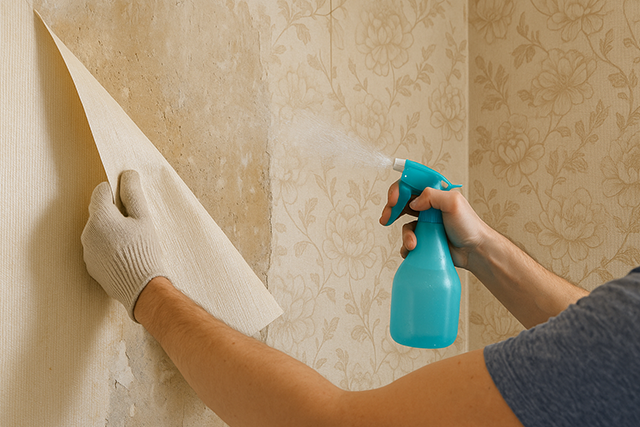

Old wallpaper can become a real problem once edges curl, seams split, bubbles form, or several painted layers sit over the original covering. Pulling it off without the right method can tear drywall paper, leave stubborn adhesive, or damage plaster underneath.
At Bravo Painting, we approach wallpaper removal in Chelmsford, MA by first identifying the wallcovering and the surface beneath it. Vinyl-coated paper, paper-backed vinyl, traditional paper, and older wallcoverings do not always release the same way. We use the condition of the material to decide whether scoring, controlled moisture, steaming, or careful hand stripping is suitable.
Our wallpaper removers work section by section instead of forcing large areas loose at once. This gives us better control around seams, corners, outlets, switches, trim, and other places where wallcovering often holds more firmly.
Several factors can affect how removal proceeds:
Homeowners often choose our wallpaper removal services in Chelmsford, MA because removing the visible paper is only one part of the job. The wall beneath also matters. We check exposed areas as work progresses so damaged drywall facing, soft sections, deep gouges, and remaining paste are identified rather than hidden. Once the covering is removed, the next concern becomes what remains attached to the wall.
Wallpaper may peel away while leaving a thin glue film behind. That residue can feel sticky, appear shiny under light, or remain almost invisible until a new coating is applied. Leaving it untreated can affect how later wall finishes bond and dry.
Our approach to the best wallpaper removal in Chelmsford, MA is based on removing wallcovering without treating every wall the same. Some adhesives soften with controlled moisture, while older paste can require repeated treatment and careful scraping. We adjust the method according to how strongly the residue is bonded to the substrate.
During wallpaper removal, we pay close attention to adhesive buildup near overlapping seams and wall edges. These areas can hold more paste than broad wall sections and may require separate cleaning rather than aggressive scraping.
Our adhesive-removal work may include:
Our wallpaper removers in Chelmsford, MA also know that excessive water can create another problem. Drywall facing can soften when it becomes too wet, while weak plaster may react poorly to forceful scraping. Controlled application helps reduce unnecessary wall damage.
After adhesive is addressed, the wall can be inspected more clearly. That inspection often shows whether the wallcovering was hiding small defects that should be handled before the surface receives its next finish.
Multiple wallpaper layers can make stripping far more involved than removing one recent covering. Older homes may contain newer vinyl over paper wallpaper, border adhesive over painted walls, or several generations of wallcovering applied without removing the material underneath.
With wallpaper stripping services in Chelmsford, MA, we separate these layers in a controlled order. Pulling everything at once can cause the lowest layer to tear into the drywall facing or pull loose material from plaster. Working through each layer helps us see how the underlying surface responds.
Different wallpaper materials can require different handling methods:
Careful wallpaper stripping also matters around window casings, door trim, baseboards, inside corners, and ceiling lines. Wallpaper can be tucked behind edges or cut tightly against trim, making rushed pulling more likely to tear nearby material.
Many homeowners searching for wallpaper removers near me are dealing with walls whose history is not obvious at first glance. We assess each exposed layer as it comes away rather than assuming the same removal method will work across the entire room. Once those layers are gone, the wall can move into its final preparation stage.
A stripped wall is not automatically ready for paint or another wall finish. Small scraper marks, torn drywall facing, open nail holes, uneven patches, and traces of paste can become much more noticeable after the wallpaper is gone. As part of wallpaper removal in Chelmsford, MA, we look at the exposed wall as a working surface rather than treating paper removal as the stopping point. This helps us identify areas that may need light patching, sanding, cleaning, or sealing before another finish is considered.
Wall preparation can involve several separate checks:
Our wallpaper removal services are useful for homeowners who want old wallcovering removed without creating extra wall problems through rushed scraping or excessive moisture. We keep the work focused on the material, adhesive, substrate, and condition found in each room.
Bravo Painting brings more than 16 years of painting experience to home improvement work, giving our team practical knowledge of how wall condition can affect the next coating stage. If outdated wallpaper is keeping a room from moving forward, call Bravo Painting at (978) 204-9745 to arrange service.
We remove stubborn wallcoverings in controlled sections, helping reduce unnecessary wall damage while keeping the removal process organized around the wallpaper type and bonding strength.
Our wallpaper removal services in Chelmsford, MA focus on separating wallcoverings carefully so old backing, loose fragments, and difficult edge sections are handled without rushed pulling.
We protect nearby floors, trim, fixtures, and furnishings before stripping begins, helping keep wallpaper debris and removal moisture contained within the active work area.
Painted wallpaper usually requires access through the painted surface before the old adhesive can soften. We first check how many coats and wallpaper layers are present, since heavy paint can block moisture from reaching the backing. Small test areas help us choose a suitable removal method without immediately disturbing a large section of wall. Depending on the material, controlled scoring or another opening method may be needed before loosening begins. We then work through manageable sections while watching how the wallpaper responds. Painted wallpaper can release unevenly because some areas may contain stronger bonding or extra paint coats. Our goal is to remove each layer in a controlled order rather than pulling hard enough to disturb the wall material beneath it.
Yes, wallpaper can often be removed from plaster walls without causing cracks when the plaster is stable, and the removal method suits its condition. We first look for loose sections, existing cracks, hollow areas, or previous patches because these can react differently during stripping. Plaster does not behave exactly like drywall, so excessive force or uncontrolled moisture can create avoidable problems. We loosen the wallcovering gradually and adjust our approach if the plaster surface begins showing weakness. Older walls may also contain several wallpaper layers or paste that has hardened over time. Bravo Painting keeps the work focused on gradual release rather than aggressive scraping. This allows us to respond to the actual condition of the plaster as more of the wall becomes visible.
Wallpaper often tears into small pieces because age, material type, old adhesive, or previous coatings have changed how strongly different areas remain bonded. We inspect the wallcovering before relying on one stripping method across the whole wall. Brittle paper may break easily, while coated wallpaper may separate into a face layer and backing layer. Some areas can release quickly while nearby sections remain firmly attached. We work in smaller sections when tearing becomes frequent so the removal process stays controlled. That approach also helps us identify whether the paper needs more softening or whether a different layer is being exposed. Removing fragmented wallpaper takes more patience, but rushing usually creates more scraping and can make the remaining pieces harder to separate cleanly from the wall surface.
Dark lines along old wallpaper seams can often be reduced once the wallcovering and the material causing the marks are identified. Those lines may come from trapped dirt, adhesive buildup, old paste, staining, or differences in the wall surface beneath the seams. We first remove the surrounding wallcovering so the marks can be examined directly instead of guessing through the paper. Some residue can be cleaned during the stripping process, while actual staining may remain within the wall surface and need separate treatment before decorating. Our wallpaper removal in Chelmsford, MA gives homeowners a clear view of those previously covered areas so the next step can be based on their real condition. This prevents seam marks from being mistaken for simple surface dirt when another cause is present.
Wallpaper around built-in shelving, narrow corners, and fitted features requires slower removal because access is limited and the paper may be cut into very small sections. We work along the edges carefully rather than pulling from an open wall toward the fitted feature. Tight areas often contain extra adhesive because installers press wallpaper firmly into corners and around fixed edges. We use smaller tools and shorter working sections where full-size scraping tools cannot move safely. This gives us better control near shelf sides, trim lines, brackets, and narrow gaps. We also watch for wallpaper that disappears slightly behind fixed woodwork. Removing those sections carefully helps avoid unnecessary pulling against nearby finishes. The process takes more control than stripping an open wall, but it produces a more complete removal.
Wallpaper behind radiators often needs a different approach because heat exposure, limited access, and tight clearance can change the way the paper and adhesive behave. We first determine how much of the wall can be reached safely without forcing tools into narrow spaces. Older wallpaper behind heating units can become brittle from repeated temperature changes, while adhesive may remain firm in protected areas. Where practical, we work from accessible edges and remove smaller sections instead of trying to pull large sheets through a confined gap. We also keep moisture controlled around nearby heating components. If access is too restricted, the condition of the radiator setup affects how much wallcovering can be reached. Bravo Painting bases the removal method on actual access rather than forcing a standard approach into a difficult area.
Wallpaper can lift near ceilings because upper seams may receive different heat, humidity, air movement, or adhesive coverage than lower sections. The visible lifting does not always mean the rest of the sheet will peel away easily. We inspect how firmly the paper remains bonded below the loose edge before removing it. Pulling from an already lifted section can sometimes tear the sheet and leave the backing fixed to the wall. Instead, we use the loose area as a starting point while checking how the remaining adhesive responds. Ceiling lines also require care because wallpaper may meet painted surfaces, molding, or uneven plaster at the top edge. A controlled removal method helps separate the paper without unnecessarily disturbing nearby ceiling finishes or leaving narrow strips behind.
Decorative borders can require separate stripping because their adhesive, material, and installation date may differ from the wallpaper beneath or around them. We identify whether the border sits directly on the wall, over another wallpaper layer, or over a painted surface before removal begins. Borders are often installed with stronger adhesive, especially along kitchens, bedrooms, and ceiling lines. We work along their edges in smaller sections so the border does not pull surrounding wallcovering unpredictably. If another wallpaper layer sits underneath, we treat that layer as a separate stage rather than assuming both materials will release together. This gives homeowners a clearer removal process and reduces unnecessary tearing. Once the border is gone, we can see whether adhesive or backing remains along the decorative strip area.
I’m Gino, owner of Bravo Painting. For more than 16 years, I have worked with homeowners who want dependable help with painting, repairs, and property improvements.